

Greece Travel Guide for First-Time Visitors: Everything You Need to Know Before You Go
Opinions, reviews, analyses & recommendations are the author’s alone, and have not been reviewed, endorsed or approved by any of these entities. This post may contain affiliate links, meaning I get a commission if you decide to make a purchase through my links, at no cost to you. As an Amazon Associate I earn from qualifying purchases.
Greece is one of those destinations that seems almost too good to be real. Ancient ruins sit alongside turquoise water, whitewashed villages cling to dramatic cliffs, and some of Europe’s best food can be found in tiny family-run tavernas.
But planning your first trip to Greece can also feel overwhelming.
With more than 6,000 islands and islets, dozens of historic destinations, an extensive ferry network, and seemingly endless beaches, it can be difficult to know where to go, how long to stay, and how to get around.
If you’re planning your first trip to Greece, this Greece travel guide will walk you through everything you need to know—from the best places to visit and when to go to transportation, money, food, packing, and common mistakes to avoid.
Whether you’re planning a romantic honeymoon, a family vacation, a backpacking adventure, or your first European getaway, Greece is a destination that can be customized to fit almost any travel style.
Greece at a Glance
Before getting into the details, here’s a quick overview of what first-time visitors should know:
- Capital: Athens
- Currency: Euro (€)
- Language: Greek
- Time Zone: Eastern European Time
- Best known for: Ancient history, islands, beaches, Greek food, and Mediterranean scenery
- Best time to visit: May through October, depending on your priorities
- Ideal first trip: 7–14 days
- Major airports: Athens, Thessaloniki, Heraklion, Santorini, Mykonos, Rhodes
- Transportation: Flights, ferries, buses, rental cars, taxis, and walking
- Electricity: Type C and F plugs, 230V
- Tipping: Appreciated but generally not as rigidly expected as in the United States
Where Should You Go in Greece for Your First Trip?
One of the hardest parts of planning a Greece vacation is deciding where to go.
You simply cannot see everything in one trip.
For first-time visitors, it’s usually better to choose two or three destinations rather than attempting to visit as many Greek islands as possible. Constantly packing, unpacking, and traveling between islands can quickly turn a relaxing vacation into a transportation marathon.
Here are some of the most popular destinations to consider.
Athens
Most first-time visitors will spend at least some time in Athens, and it’s worth more than simply treating the city as an airport stop.
Athens is home to some of Greece’s most important archaeological sites, including the Acropolis and Parthenon. The city also has excellent restaurants, rooftop bars, historic neighborhoods, and lively markets.
Spend at least 2–3 days in Athens if your schedule allows.
Popular things to do include:
- Visit the Acropolis
- See the Parthenon
- Explore the Acropolis Museum
- Walk through Plaka
- Explore Monastiraki
- Visit the Ancient Agora
- Watch the sunset from a rooftop
- Try traditional Greek food
- Explore the city’s street art
Athens is also one of the easiest places to begin a Greek island-hopping itinerary.
Santorini
Santorini is probably the Greek island most people picture when they imagine Greece.
Its famous whitewashed buildings, blue domes, volcanic cliffs, and spectacular sunsets make it one of the country’s most recognizable destinations.
First-time visitors often stay in Oia or Fira, although there are several other areas worth considering.
Santorini is especially popular for:
- Couples and honeymoons
- Sunset views
- Luxury hotels
- Caldera views
- Wine tasting
- Sailing and catamaran cruises
- Volcano excursions
- Photography
However, Santorini isn’t necessarily the best Greek island for a traditional beach vacation. The island is volcanic, and its beaches look very different from the white-sand beaches you might imagine.
If you’re visiting Santorini for the first time, don’t spend your entire trip sitting at your hotel. Explore Oia, visit Fira, take a boat tour, try local wine, and consider hiking between Fira and Oia.
Mykonos
Mykonos is famous for its beaches, nightlife, luxury hotels, and picturesque streets.
It’s a particularly popular choice for travelers who want a combination of beautiful scenery and nightlife.
If you’re looking for a quieter Greek island experience, however, Mykonos may not be your first choice—especially during the busiest summer months.
Crete
Crete is Greece’s largest island and one of the best destinations for travelers who want more variety.
You can find beaches, mountains, historic sites, villages, cities, resorts, and excellent food all on the same island.
Popular areas include:
- Heraklion
- Chania
- Rethymno
- Elounda
- Agios Nikolaos
Crete is particularly good for longer trips because there’s enough to explore that you can easily spend a week or more here.
Naxos and Paros
If you’re looking for beautiful Greek islands without quite as much of the intensity associated with Santorini and Mykonos, consider Naxos or Paros.
Naxos is known for its beaches, food, villages, and relaxed atmosphere.
Paros combines beautiful beaches with charming towns and a lively but generally more relaxed atmosphere.
Both can be excellent alternatives—or additions—to a classic Santorini itinerary.
How Many Days Do You Need in Greece?
For a first trip, 7–14 days is ideal.
If you only have one week, resist the temptation to visit four or five destinations.
A one-week trip could look like:
Option 1: Classic Greece
- 3 days Athens
- 4 days Santorini
Option 2: History + Island
- 3 days Athens
- 4 days Crete
Option 3: Greek Island Escape
- 3 days Santorini
- 4 days Naxos
With 10–14 days, you can comfortably combine Athens with two or three islands or destinations.
For example:
14-Day Greece Itinerary
- 3 days Athens
- 4 days Santorini
- 4 days Crete
- 3 days additional island or Athens
The biggest mistake is trying to squeeze too much into your itinerary.
Remember that every time you change destinations, you lose part of a day to packing, transportation, check-in, and getting settled.
When Is the Best Time to Visit Greece?
The best time to visit Greece depends on what you want from your trip.
May and June
Late spring and early summer can be fantastic.
The weather is generally warm, the islands are open for the tourist season, and crowds are typically lighter than in the middle of summer.
June is an excellent choice if you want warm beach weather without visiting during the busiest part of the season.
July and August
July and August are peak summer.
Expect:
- Hot temperatures
- Crowded attractions
- Busy ferries
- Higher hotel prices
- Popular restaurants and tours selling out
- Very busy beaches
If summer is the only time you can travel, don’t let that stop you from visiting Greece. Just plan ahead.
Book accommodations, ferries, popular tours, and major attractions in advance.
September
September is one of my favorite months for a Greece vacation.
The summer crowds begin to ease, the sea remains warm, and temperatures are generally more comfortable than the hottest part of summer.
It’s an especially appealing time for couples and travelers who want to enjoy the islands without quite as much of the peak-season intensity.
October
October can still be enjoyable, particularly early in the month, but the weather becomes less predictable and some seasonal businesses begin closing.
For a first trip focused heavily on beaches and swimming, summer and early fall are safer choices.
How to Get Around Greece
Transportation is one of the most important things to understand when planning a Greece vacation.
Fortunately, you have several options.
Ferries
Ferries are one of the most popular ways to travel between Greek islands.
Depending on your route, you’ll find everything from large conventional ferries to faster high-speed services.
When booking a ferry, pay attention to:
- Departure port
- Arrival port
- Travel time
- Ferry type
- Departure time
- Luggage policies
- Weather conditions
Don’t assume that every ferry leaves from the same port.
For example, Athens has multiple ports, and your transportation plan should account for the time needed to get to the correct terminal.
How Early Should You Arrive for a Greek Ferry?
For a first-time traveler, arriving 30–60 minutes before departure is a reasonable general guideline, with more time recommended during busy periods or when you’re unfamiliar with the port.
For high-speed ferries, don’t cut it close.
Your ferry ticket may have a specific boarding location, and ports can be larger and more chaotic than expected.
Domestic Flights
Flying can be significantly faster than taking a ferry on some routes.
Greece has several airports throughout the country and islands, making domestic flights useful when you’re trying to cover a lot of ground.
Flights are particularly useful for longer distances.
Rental Cars
A rental car can be extremely useful in destinations such as Crete, especially if you want to explore beaches, villages, archaeological sites, and areas outside the main tourist centers.
A car isn’t always necessary in Athens or central Santorini.
Before renting, make sure you understand the rental company’s insurance requirements, fuel policy, driving rules, and parking situation.
Walking
Don’t underestimate walking in Greece.
Historic neighborhoods, island villages, and tourist areas are often best explored on foot.
Just remember that Greece can involve steep hills, stairs, cobblestones, and uneven surfaces.
Comfortable shoes are essential.
How Much Does a Trip to Greece Cost?
Greece can accommodate a wide range of travel budgets.
Your biggest expenses will generally be:
- Flights
- Hotels
- Transportation between destinations
- Tours and activities
- Food and drinks
Athens can be relatively affordable compared with many major European capitals, while popular islands such as Santorini and Mykonos can become expensive quickly.
To save money:
- Travel during shoulder season
- Stay outside the most expensive caldera-view areas
- Eat at local tavernas
- Use public transportation
- Book ferries and flights early
- Compare hotels before booking
- Choose fewer destinations
- Mix expensive experiences with inexpensive activities
One important tip: don’t assume Greece is automatically a cheap European destination.
You can absolutely travel through Greece on a budget, but luxury hotels, private tours, premium ferry tickets, and high-end restaurants can make costs rise quickly.
Do You Need Cash in Greece?
You should carry some euros, but you generally don’t need to carry your entire vacation budget in cash.
Credit and debit cards are widely accepted in tourist areas, hotels, restaurants, and larger businesses.
However, cash can still be useful for:
- Small businesses
- Markets
- Small purchases
- Tips
- Remote locations
- Certain taxis
- Beach vendors
A good strategy is to carry a small amount of cash and use a credit card whenever it’s accepted.
If an ATM or card terminal asks whether you want to pay in euros or have the transaction converted to U.S. dollars, choose euros. Your card issuer will generally handle the currency conversion, and accepting the merchant’s conversion can result in a less favorable exchange rate.
What Should You Eat in Greece?
Food is one of the best parts of visiting Greece.
And Greek food is about much more than gyros.
Some foods to try include:
Moussaka
A layered baked dish traditionally made with eggplant, meat, and a creamy béchamel topping.
Souvlaki
Grilled meat served on skewers or in a pita.
Greek Salad
Typically made with tomatoes, cucumber, olives, feta, and other fresh ingredients.
Tzatziki
A creamy yogurt-based dip flavored with cucumber, garlic, and herbs.
Spanakopita
Savory pastry filled with spinach and feta.
Baklava
A sweet pastry made with layers of flaky dough, nuts, and syrup or honey.
Fresh Seafood
If you enjoy seafood, coastal Greece offers countless opportunities to try locally prepared fish and other dishes.
Don’t be afraid to eat at smaller neighborhood restaurants. Some of the best meals you’ll have in Greece may come from restaurants that aren’t famous on social media.
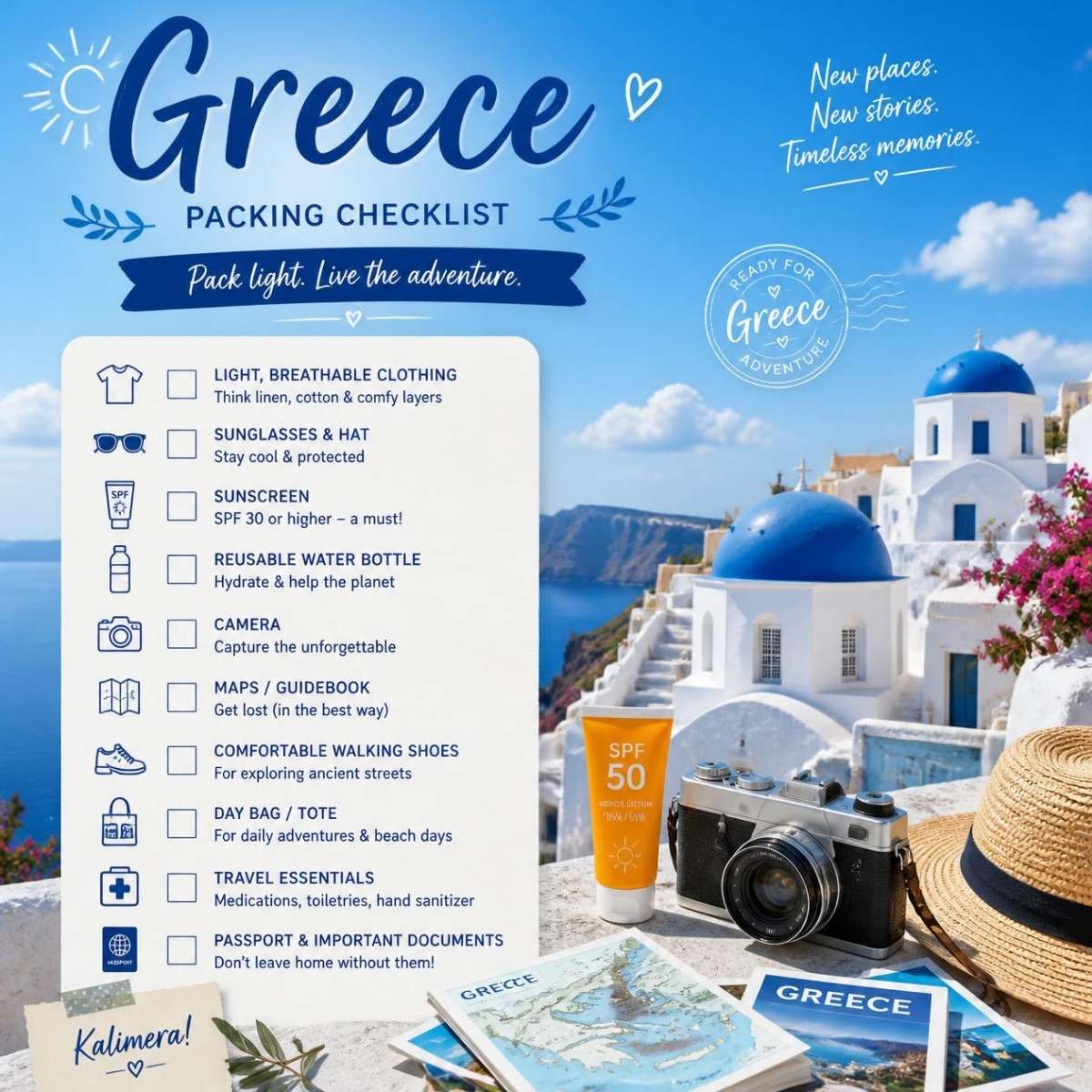
What Should You Pack for Greece?
Packing light will make your Greece trip much easier.
If you’re island hopping, you’ll appreciate not having to drag a huge suitcase over cobblestones, up stairs, and onto ferries.
For a typical summer trip, consider bringing:
- Lightweight clothing
- Comfortable walking shoes
- Sandals
- Swimsuit
- Sun hat
- Sunglasses
- Sunscreen
- Light jacket or sweater
- Reusable water bottle
- Small day bag
- Portable charger
- Travel adapter
- Basic toiletries
- Any required medications
- Copies of important travel documents
If you’re visiting multiple islands, a backpack or carry-on-sized luggage can be much more convenient than a large suitcase.
Don’t Overpack
This is especially important in Greece.
You probably don’t need a different outfit for every day.
Pack clothing that can be mixed and matched and remember that you’ll likely spend a significant amount of time in swimwear, casual clothing, and comfortable walking clothes.
What Should You Know About Greek Culture?
Greece is extremely welcoming to visitors, but understanding a few cultural norms can make your trip more enjoyable.
Don’t rush meals.
Greek dining culture can be leisurely. Dinner may last significantly longer than you’re accustomed to, particularly if you’re eating with friends or family.
Don’t expect everything to happen on an American schedule.
Meals, transportation, and service can operate at a slower pace.
Also, dress appropriately when visiting churches and religious sites. Some locations may require shoulders and knees to be covered.
And remember that many businesses close during the afternoon, particularly outside major tourist areas.
Is Greece Safe for First-Time Visitors?
Greece is generally considered a safe destination for tourists.
As with any major tourist destination, however, you should take normal precautions.
Keep an eye on your belongings in crowded areas, particularly on public transportation and in busy tourist districts.
Don’t leave valuables unattended on beaches or in rental cars.
Keep copies of important documents and make sure you know how to contact your bank or credit card company if your card is lost.
Travel insurance is also worth considering, particularly when your itinerary involves multiple flights, ferries, hotels, and tours.
Common Mistakes First-Time Visitors Make in Greece
Trying to See Too Many Islands
This is probably the biggest mistake.
Greece looks small on a map, but transportation between destinations can take longer than expected.
Choose a few destinations and enjoy them.
Booking Hotels Without Checking the Location
A beautiful hotel isn’t necessarily convenient.
Look at the hotel’s location relative to transportation, restaurants, attractions, beaches, and ferry ports before booking.
Underestimating the Heat
Summer in Greece can be extremely hot.
Plan outdoor sightseeing for the morning or evening when possible.
Wearing Uncomfortable Shoes
You’ll encounter stairs, cobblestones, hills, and uneven surfaces.
Your feet will thank you for packing comfortable shoes.
Assuming Every Island Has the Same Atmosphere
Santorini isn’t Mykonos.
Mykonos isn’t Crete.
Crete isn’t Naxos.
Each destination has its own personality, landscape, beaches, nightlife, food, and pace.
Choose destinations based on what you actually want from your vacation.
Planning Every Minute
Some of the best Greece experiences happen when you don’t have a schedule.
Leave room for a long lunch, an unexpected beach stop, wandering through a village, or watching the sunset.
A Perfect First-Time Greece Itinerary
If you want a classic introduction to Greece, here’s a simple 10-day itinerary:
Days 1–3: Athens
Explore the Acropolis, Plaka, Monastiraki, the Ancient Agora, and Athens’ food scene.
Days 4–6: Santorini
Explore Oia and Fira, enjoy a sunset, take a catamaran cruise, visit a winery, and spend time exploring the island.
Days 7–10: Crete
Use Crete as your more relaxed destination.
Enjoy beaches, local restaurants, historic sites, and the island’s scenery.
This itinerary gives you a combination of:
- Ancient history
- Greek island scenery
- Beaches
- Food
- Culture
- Relaxation
- Adventure
And most importantly, it doesn’t require you to change hotels every night.
Greece Travel Tips for First-Time Visitors
Before you leave, keep these tips in mind:
Book popular experiences ahead of time. Major attractions, ferries, popular hotels, and specialty tours can sell out.
Start sightseeing early. Morning is often the most comfortable time to explore outdoor attractions.
Bring comfortable shoes. You will walk more than you expect.
Carry a little cash. Cards are widely accepted, but cash is still useful.
Don’t schedule too many destinations. Fewer places usually means a better trip.
Allow extra transportation time. Ferries and flights can be affected by weather or operational changes.
Drink plenty of water. Mediterranean summer heat can sneak up on you.
Try local food. Don’t spend your entire trip eating at restaurants designed exclusively for tourists.
Learn a few Greek words. Even a simple “yassas” (hello) or “efcharistó” (thank you) can be appreciated.
Leave room for spontaneity. Greece is best experienced when you aren’t constantly watching the clock.
Frequently Asked Questions About Traveling to Greece
How many days should a first-time visitor spend in Greece?
A first-time visitor should ideally spend 7–14 days in Greece. Seven days is enough for two destinations, while 10–14 days allows you to combine Athens with two or three islands or regions.
What is the best Greek island for first-time visitors?
Santorini is one of the most popular choices for first-time visitors because of its dramatic scenery, famous villages, sunsets, and unique volcanic landscape. However, Naxos, Paros, and Crete can be better choices for travelers prioritizing beaches and a more relaxed experience.
Is Greece expensive?
Greece can be either relatively affordable or very expensive depending on where and how you travel. Popular destinations such as Santorini and Mykonos can have significantly higher hotel and restaurant prices than less-touristy areas.
Do I need a car in Greece?
Not necessarily. Athens is easy to explore without a car, and many islands have buses, taxis, and organized tours. A rental car can be especially useful in larger destinations such as Crete.
Can I use credit cards in Greece?
Yes. Credit cards are widely accepted throughout tourist areas, although you should still carry some euros for small purchases and businesses that don’t accept cards.
Is Greece good for a honeymoon?
Absolutely. Greece is one of Europe’s most popular honeymoon destinations. Santorini is particularly famous for romantic hotels, caldera views, sunsets, sailing, and luxury experiences, while Crete and other islands offer excellent options for couples who want more space and relaxation.
Final Thoughts: Planning Your First Trip to Greece
A first trip to Greece can be overwhelming because there are simply so many incredible places to choose from.
But you don’t need to see everything.
The best Greece itinerary is the one that gives you enough time to actually enjoy where you are.
Spend a few days exploring ancient Athens. Wander through the streets of a Greek island village. Eat a long dinner at a family-run taverna. Watch the sunset over the Aegean Sea. Take a ferry and enjoy the views. Spend an afternoon at the beach with nowhere else to be.
That’s what makes Greece so memorable.
Whether you choose Athens and Santorini, explore the beaches of Crete, island-hop through the Cyclades, or venture somewhere completely off the traditional tourist route, Greece has a way of making travelers want to come back before they’ve even left.
And if this is your first Greek vacation, don’t worry about creating a perfect itinerary.
Choose a few places that excite you, plan the important logistics ahead of time, leave some room for spontaneity, and enjoy the experience.
Greece isn’t a destination you need to rush through. It’s a place you should slow down and experience.
Greece Travel Guide: Quick Planning Checklist
Before your trip, make sure you’ve:
☐ Chosen 2–3 destinations
☐ Booked your flights
☐ Reserved accommodations
☐ Checked ferry and domestic flight schedules
☐ Booked major attractions
☐ Reserved popular tours
☐ Checked passport requirements
☐ Purchased travel insurance
☐ Notified your bank and credit card companies
☐ Packed comfortable walking shoes
☐ Packed sunscreen and swimwear
☐ Downloaded offline maps
☐ Brought some euros
☐ Saved copies of important travel documents
☐ Left some free time in your itinerary
Ready to start planning your Greece vacation? Start with your destination, decide how much time you have, and build your itinerary around the experiences you don’t want to miss. The rest can fall into place from there.